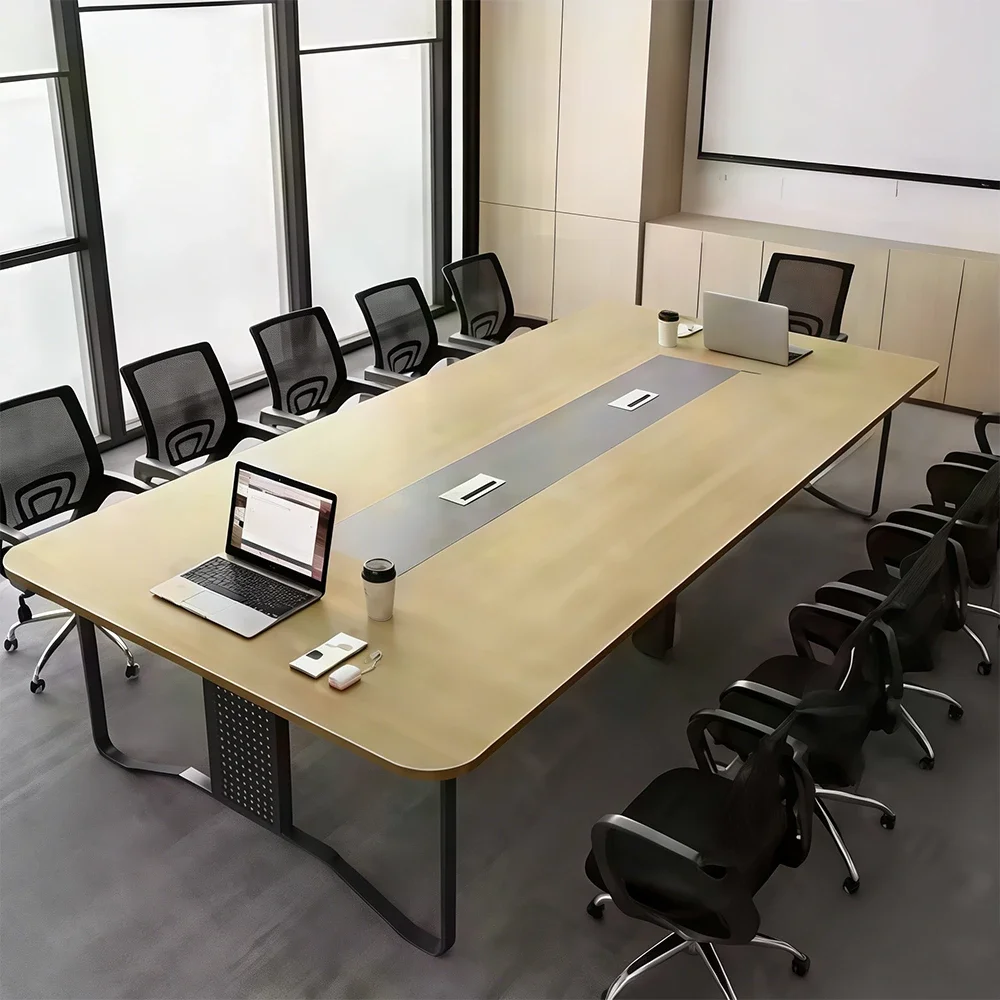
Conference Table Buying Guide Choose a Conference Table That Fits the Room, the Team, and the Way You Meet A conference table is more than a place to sit. It shapes how people collaborate, present ideas, review plans, meet clients, and make decisions. The right table should fit your room, seat the right number of people, support technology, and create a professional meeting experience. This guide explains how to choose a conference table by room size, seating capacity, shape, cable management, meeting style, material, and boardroom appearance. Small Meeting Room? Start with round, oval, or compact rectangular conference tables. Formal Boardroom? Choose boardroom, rectangular, or boat-shaped conference tables for a stronger executive look. Flexible Team Space? Modular conference tables work better when the room needs to change for different meetings. Browse Conference Tables
How to Choose the Right Conference Table for Your Meeting Room
A conference table is one of the most important furniture pieces in a meeting room. It affects how many people can sit comfortably, how easily the room supports presentations, how professional the space feels, and how well the team can collaborate during daily meetings, client discussions, training sessions, and boardroom decisions.
The best conference table is not simply the largest table that fits. It should match the room size, leave enough space for chairs and movement, support power and cable needs, fit your meeting style, and reflect the image you want your office to present.
Measure the Room
Check room length, width, door swing, wall clearance, chair pull-out space, and screen position.
Plan for Comfort
Choose the table size based on real seating comfort, not only the maximum number of chairs.
Plan Power & Cables
Think about laptops, video calls, charging, HDMI, USB-C, and conference room AV before buying.
Match the Meeting Style
Board meetings, team huddles, client presentations, and training rooms need different table shapes.
Quick Answer: What Makes a Good Conference Table?
A good conference table should fit the room, seat the right number of people comfortably, support the way your team meets, and make the meeting room look professional. It should leave enough space around the table for chairs, walking paths, presentation equipment, and daily movement.
Simple rule: choose the conference table after you know the room size, the usual number of meeting participants, the screen or presentation location, and the technology your team uses during meetings.
Jump to What You Need
1. Compare Conference Table Types
Most buyers start by comparing table shape. The shape affects room flow, seating capacity, conversation style, sightlines, and the overall feeling of the meeting room. If you are still browsing, start with the full conference tables collection, then narrow your choice by shape and meeting style.
| Conference Table Type | Best For | Main Advantage | Best Internal Link |
|---|---|---|---|
| Round Conference Table | Small teams, collaborative meetings, compact rooms | Encourages conversation and feels less hierarchical | Round Conference Tables |
| Rectangular Conference Table | Standard meeting rooms, larger teams, presentations | Seats more people efficiently and works well in long rooms | Rectangular Conference Tables |
| Oval Conference Table | Modern offices, medium rooms, softer layouts | Provides length without sharp corners and improves visual flow | Oval Conference Tables |
| Boat-Shaped Conference Table | Boardrooms, client meetings, video presentations | Creates better sightlines and a more executive boardroom look | Boat-Shaped Conference Tables |
| Boardroom Table | Executive meetings, leadership rooms, formal spaces | Creates a polished, professional, decision-making environment | Boardroom Tables |
| Modular Conference Table | Training rooms, flexible offices, multi-use meeting spaces | Can be rearranged for different meeting formats | Modular Conference Tables |
2. Choose the Right Conference Table Size
Size is the most important decision when buying a conference table. A table that is too small feels crowded and unprofessional. A table that is too large can make the room difficult to move through, block access to screens or cabinets, and make people feel uncomfortable during meetings.
Before choosing a table, measure the full room. Include the wall-to-wall dimensions, door swing, screen or monitor location, cabinet placement, windows, whiteboards, and any video conferencing equipment. Then subtract the space needed around the table for chairs and movement.
Room Planning Tip
Do not measure only the tabletop. Measure the table, chairs, walking paths, presentation wall, and the space people need to enter, sit down, stand up, and walk behind seated participants.
Small Meeting Room
Round, oval, or compact rectangular tables often work best when space is limited.
Standard Conference Room
Rectangular, oval, or boat-shaped tables can support regular team meetings and client discussions.
Large Boardroom
Boardroom tables and larger boat-shaped tables create stronger presence for executive meetings.
3. Plan Seating Capacity Around Real Comfort
Many buyers focus only on how many chairs can fit around a table. A better approach is to think about how many people can sit comfortably, use laptops, take notes, and move in and out of the room without disturbing everyone.
For everyday meetings, each person needs enough width for a chair, arms, notebook, laptop, and personal space. If your meetings often include laptops, printed documents, food, samples, or presentation materials, choose more table space per person instead of trying to maximize chair count.
| Meeting Need | Better Table Choice | Why It Works |
|---|---|---|
| Small team discussion | Round or compact oval table | Makes conversation feel more equal and natural |
| Formal client meeting | Rectangular or boat-shaped table | Creates a professional layout with clear seating structure |
| Executive board meeting | Boardroom or boat-shaped table | Supports leadership presence and clear sightlines |
| Training or workshop | Modular conference table | Can be rearranged for teaching, breakout groups, or collaboration |
4. Do Not Ignore Power, Cable Management, and Video Meetings
Modern conference rooms are not just furniture spaces. They often need power outlets, laptop charging, HDMI, USB-C, microphones, cameras, speakerphones, screens, and wireless presentation systems. If these needs are not planned before buying the table, the room can end up with visible cords, unsafe power strips, or awkward cable runs across the floor.
Before choosing a table, think about how people actually use the room. Do they bring laptops? Do they need to charge devices during long meetings? Do they connect to a wall screen? Is the room used for video calls? Is there a floor outlet, wall outlet, or power access under the table?
Cable Planning Rule
Plan power and AV before the table is delivered. A premium conference table can still make the room look unfinished if cables are running across the floor or hanging from the tabletop.
For Laptop Meetings
Look for tables with power access, cable ports, or enough tabletop space for charging devices.
For Presentations
Plan the table position around the screen, camera, speakerphone, and presenter sightlines.
For Video Calls
Avoid layouts where people are too far from microphones or blocked from the camera view.
5. Choose the Table Shape Based on Meeting Style
Different meetings need different table shapes. A rectangular table may be best for formal presentations, while a round table may work better for small team discussion. A boat-shaped table can make it easier for people to see each other and the front of the room. Modular tables are useful when one room needs to support several different meeting formats.
6. Match the Table Style to the Office Image
A conference room often represents the company to employees, clients, vendors, and leadership teams. The table should match the visual tone of the office. A clean rectangular table can feel professional and efficient. A boat-shaped boardroom table can feel more executive. A modular setup can feel modern and flexible. A round table can feel more collaborative and less formal.
| Office Image | Better Table Direction | Why It Works |
|---|---|---|
| Clean and modern | Rectangular, oval, or modular table | Keeps the room polished, flexible, and easy to use |
| Executive and premium | Boardroom or boat-shaped table | Creates stronger leadership presence and a formal meeting tone |
| Collaborative and creative | Round, oval, or modular table | Encourages conversation, flexibility, and group participation |
| Training and multi-use | Modular conference table | Supports different layouts for different meeting needs |
Common Conference Table Mistakes to Avoid
Buying Too Large
A large table can look impressive but make the room uncomfortable if people cannot move around it easily.
Ignoring Cable Needs
Power, charging, HDMI, USB-C, and video call equipment should be planned before installation.
Maximizing Chair Count
A table that technically seats more people may still feel cramped during real meetings.
Forgetting Room Use
A boardroom, training room, and collaboration room should not always use the same table layout.
Conference Table Buying Checklist
Use this checklist before choosing your conference table:
Build a Meeting Room That Works Better
The right conference table can make meetings more comfortable, more organized, and more professional. Start with the room size, then choose the shape, seating capacity, cable setup, and design style that supports the way your team actually meets.
Browse Maoters conference tables by shape, boardroom style, and modular meeting room needs.
FAQ
What size conference table do I need?
The right size depends on your room dimensions, seating needs, chair clearance, walking paths, and technology setup. Measure the full room and leave enough space around the table before choosing a size.
What is the best conference table shape?
The best shape depends on the room and meeting style. Rectangular tables work well in long rooms, round tables encourage conversation, oval tables soften the layout, boat-shaped tables support boardrooms and presentations, and modular tables work for flexible spaces.
Is a round or rectangular conference table better?
A round conference table is better for smaller groups and equal discussion. A rectangular conference table is better for larger meetings, presentations, and rooms with a longer layout.
What is a boat-shaped conference table used for?
A boat-shaped conference table is often used in boardrooms and executive meeting rooms. Its curved sides can improve sightlines and create a more refined, formal meeting environment.
When should I choose modular conference tables?
Choose modular conference tables when the room needs to change for different uses, such as training, workshops, team meetings, presentations, or breakout sessions.
Should a conference table have power or cable management?
For most modern meeting rooms, power and cable management are highly useful. They help support laptops, charging, video calls, presentations, and AV equipment while keeping the room cleaner and more professional.
Recommended for you
Was this article helpful?
Your feedback helps us improve.

About the author
MAOTERS Editorial Team
Ideas and practical guidance from the MAOTERS editorial team.
Related Articles
View all articles