Executive Desk Buying Guide Choose an Executive Desk That Looks Professional and Works Every Day An executive desk should do more than make an office look impressive. The right desk supports daily decision-making, meetings, focused work, storage, computer equipment, cable management, and the overall image of a private office. This guide explains how to choose an executive desk by size, layout, storage, material, cable access, privacy, and office style, so you can build a workspace that feels polished, functional, and comfortable. Need a Private Office Desk? Start with modern executive desks that balance style and daily function. Need More Workspace? L-shaped and corner executive desks provide more surface area for monitors, files, and meetings. Need a Premium Look? Luxury executive desks can create stronger presence in manager and CEO offices. Browse Executive Desks
How to Choose the Right Executive Desk for a Modern Office
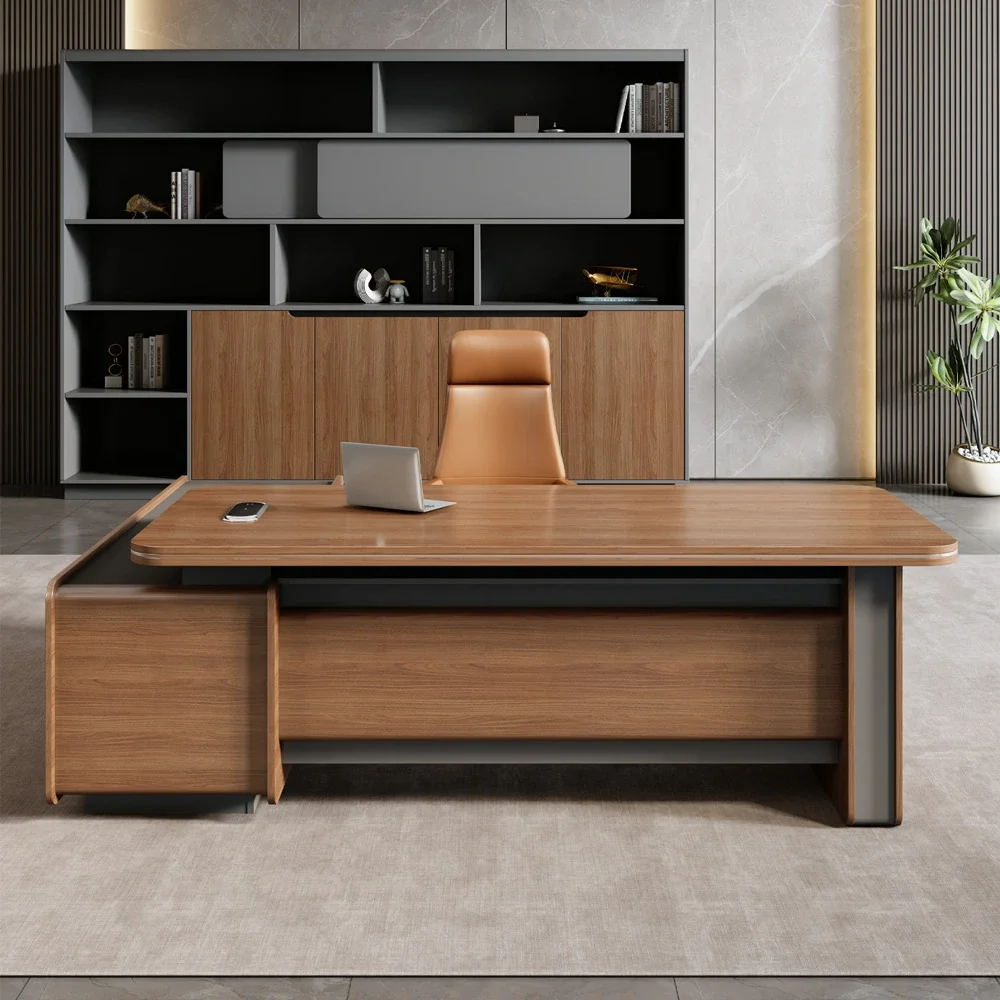
An executive desk is one of the most important pieces of furniture in a private office. It shapes the room visually, supports daily work, creates a professional impression for visitors, and helps define how the office is used for focus, meetings, planning, and decision-making.
The best executive desk is not always the biggest or the most expensive one. It should fit the room, support your computer setup, provide the right amount of storage, manage cables cleanly, and match the level of presence you want in a manager, director, CEO, or home executive office.
Measure the Room
Check desk width, depth, chair space, walking paths, cabinet clearance, and door swing.
Match the Work Style
Choose straight, L-shaped, corner, storage, or luxury designs based on daily tasks.
Plan Cable Management
Executive desks often sit away from the wall, so hidden cable routing matters.
Create Presence
Use finish, shape, scale, and storage to create a polished leadership office.
Quick Answer: What Makes a Good Executive Desk?
A good executive desk should look professional from the visitor side and work efficiently from the user side. It should provide enough desktop space for focused work, enough storage for daily essentials, enough privacy for a private office, and enough cable management to keep computers, monitors, lamps, and chargers from making the room look messy.
Simple rule: choose an executive desk based on the way the office is used every day, not only on how impressive the desk looks in a product photo.
Jump to What You Need
1. Compare Executive Desk Types
Most buyers start by comparing shape and layout. A simple desk may work well in a compact private office, while a larger L-shaped or corner desk may be better for leaders who use multiple monitors, review documents, host short meetings, or need more storage close at hand.
If you are still browsing, start with the full executive desks collection, then narrow your choice by layout, storage, and design style.
| Executive Desk Type | Best For | Main Advantage | Best Internal Link |
|---|---|---|---|
| Modern Executive Desk | Private offices, manager offices, home executive spaces | Clean design, professional appearance, easier to style | Modern Executive Desks |
| L-Shaped Executive Desk | Large work setups, multi-monitor users, paperwork-heavy offices | More surface area and better task separation | L-Shaped Executive Desks |
| Corner Executive Desk | Rooms where corner placement saves space | Uses corner areas efficiently while creating a dedicated work zone | Corner Executive Desks |
| Executive Desk with Storage | Offices with files, supplies, devices, and daily paperwork | Keeps the desktop cleaner and reduces visible clutter | Executive Desks with Storage |
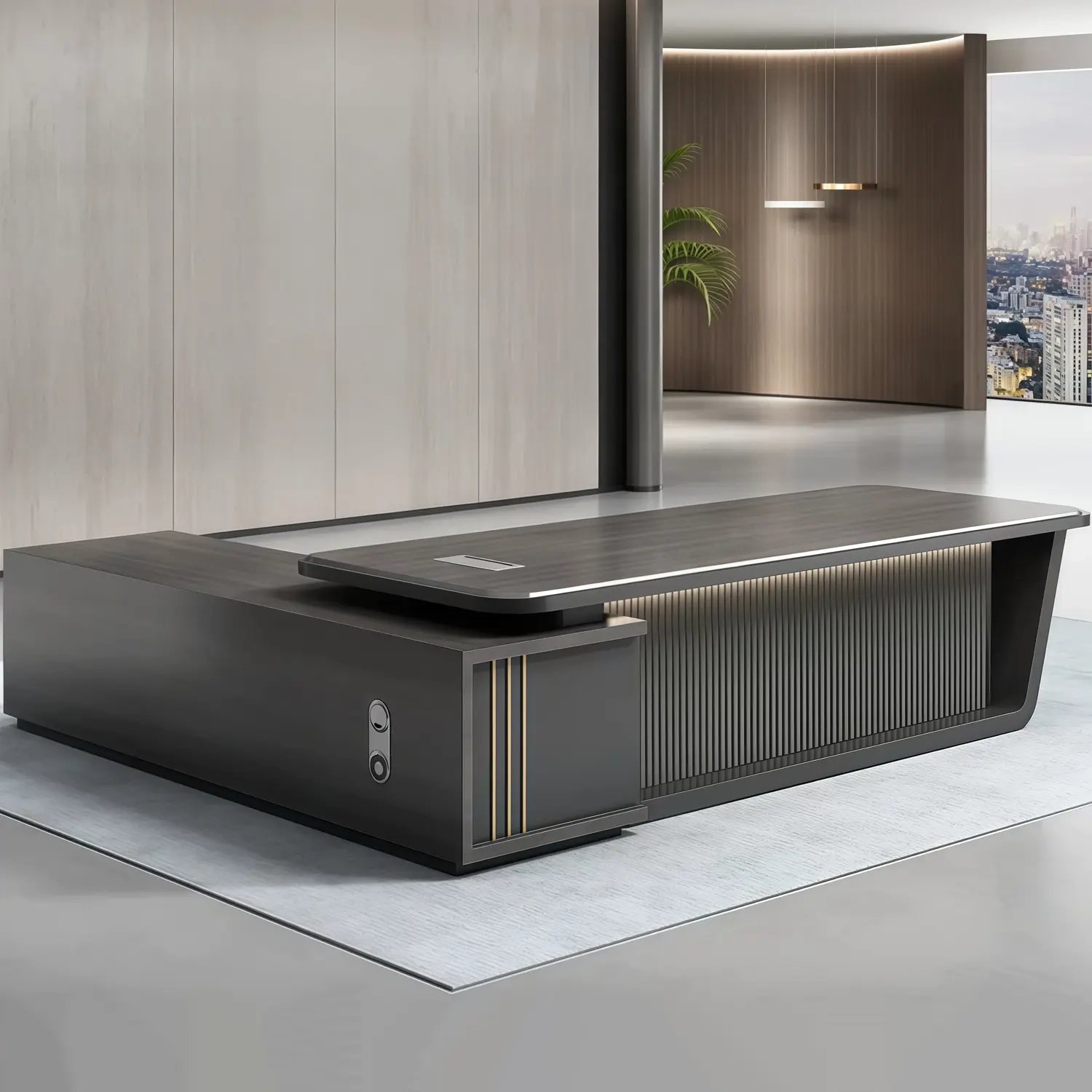
| Luxury Executive Desk | CEO offices, client-facing private offices, premium workspaces | Stronger presence, elevated design, more impressive first impression | Luxury Executive Desks |
2. Choose the Right Executive Desk Size
Size is one of the most common reasons people regret buying a desk. A desk may technically fit in a room but still feel too large once you add a chair, visitor seating, cabinets, doors, walking space, and computer equipment.
Before choosing an executive desk, measure the full room, not just the wall where the desk will sit. Consider how the desk will look from the entrance, how much space the chair needs to move, and whether the desk will block cabinets, windows, outlets, or traffic paths.
Room Planning Tip
If the desk will sit in the middle of the office, check the back view and cable route before buying. A desk that looks good against a wall may not look as clean when the back is visible from the door.
Small Private Office
Choose a modern or corner executive desk that keeps the room open and avoids crowding the entrance.
Medium Office
Consider an executive desk with storage or an L-shaped layout if you need more task space.
Large Executive Office
A luxury executive desk can create stronger presence when the room has enough scale to support it.
3. Think About How You Actually Work
An executive desk should support your real work habits. Some people need a clean surface for a laptop, notebook, and phone. Others need dual monitors, paper review space, storage for documents, a printer area, cable access, and a place to hold short conversations.
If you use a computer for long periods, the desk should support a comfortable workstation. OSHA recommends placing the keyboard directly in front of you, keeping shoulders relaxed, elbows close to the body, and wrists in line with the forearms. You can read the official OSHA guidance here: OSHA Keyboard Workstation Tips.
Mayo Clinic also notes that chair height, equipment spacing, and desk posture can affect comfort during seated work. You can review Mayo Clinic’s office ergonomics guide here: Mayo Clinic Office Ergonomics Guide.
Laptop Work
A modern executive desk with a clean surface may be enough if your setup is simple.
Dual Monitors
Choose enough depth and cable access so monitors, keyboard, and mouse fit comfortably.
Paperwork
Look for more desktop space or storage if you review files, contracts, samples, or reports.
Meetings
Choose a desk that looks polished from the visitor side and leaves room for guest chairs.
4. Decide How Much Storage You Need
Storage is one of the biggest differences between a simple desk and a true executive desk. A clean desktop helps the office look more professional, but that only works if documents, chargers, notebooks, office supplies, and personal items have somewhere to go.
If your work involves files, samples, devices, or frequent paperwork, an executive desk with storage can keep the office organized without adding too many separate cabinets to the room.
Simple Storage Rule
Keep daily-use items within reach, weekly-use items in nearby drawers or cabinets, and rarely used items away from the main desk area.
A desk with drawers, side cabinets, return storage, or matching file storage can make the office feel calmer and more intentional. It also helps when the office is used for client meetings, video calls, or leadership conversations.
5. Do Not Ignore Cable Management
Cable management is one of the most overlooked executive desk details. It becomes especially important when the desk sits in the middle of the room or faces the office door. In that layout, the back of the desk and the floor area around it are visible, so messy cables can ruin an otherwise premium office setup.
Before buying, think about what will sit on the desk: monitor, laptop, docking station, phone, lamp, charger, printer, router, speakers, or power strip. Then check whether the desk provides cable holes, back panels, wire channels, or enough hidden space to route cords cleanly.
Cable Planning Tip
If your executive desk will float in the room, plan the outlet location before delivery. A beautiful desk can still look unfinished if the power strip and cords are visible from the entrance.
6. Match the Desk Style to the Office Image
An executive office usually needs more visual presence than a standard workstation. The desk should feel appropriate for the role, room size, and brand image. A modern desk can create a clean and current look. A luxury desk can create a stronger leadership impression. A darker finish can feel more formal, while a lighter finish can make the room feel open and contemporary.
| Style Direction | Visual Feeling | Best Match |
|---|---|---|
| Modern Executive Desk | Clean, current, professional | Modern private offices, manager offices, home offices |
| Luxury Executive Desk | Premium, authoritative, impressive | CEO offices, client-facing offices, larger rooms |
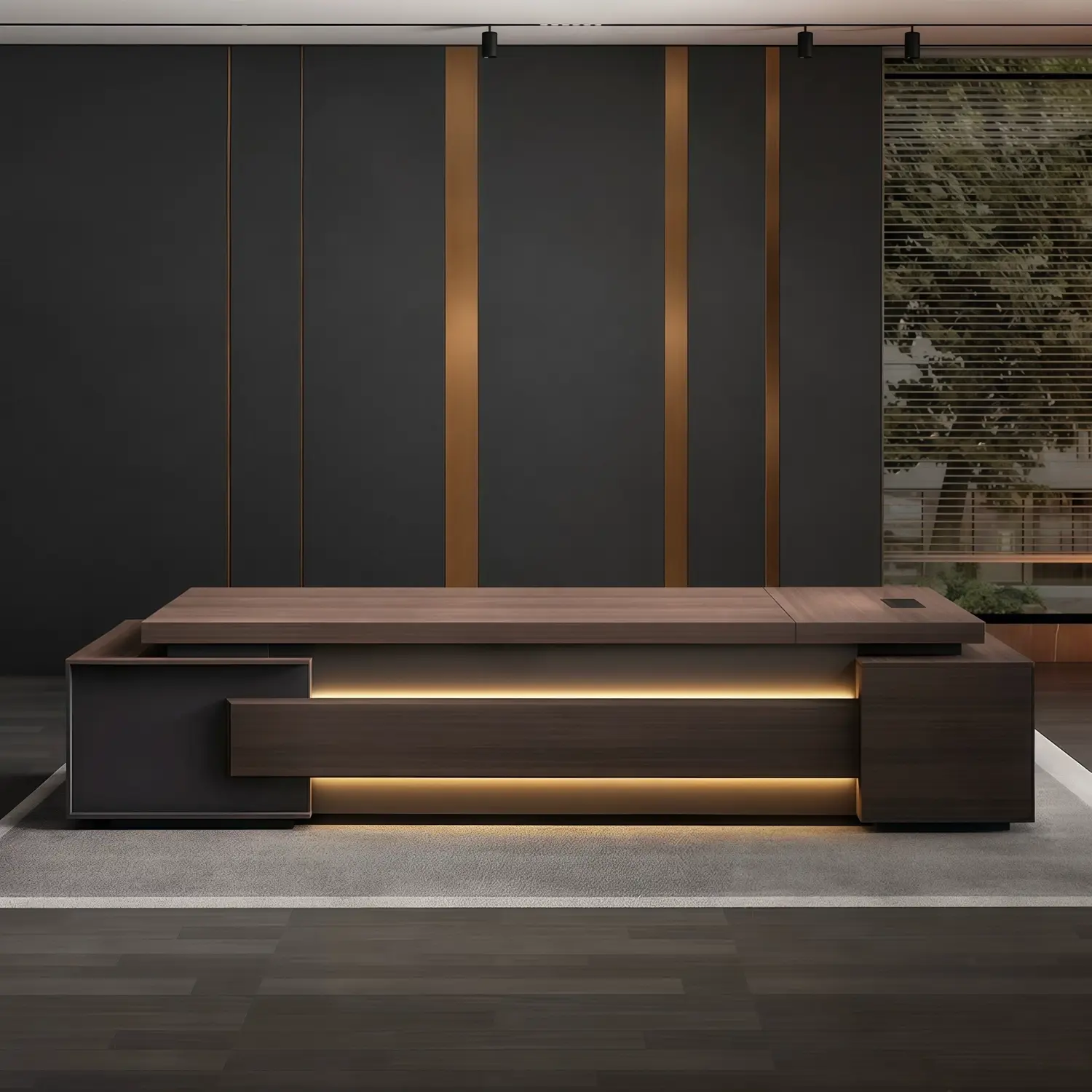
| Wood-Tone Executive Desk | Warm, grounded, traditional-modern | Law offices, consulting offices, real estate offices |
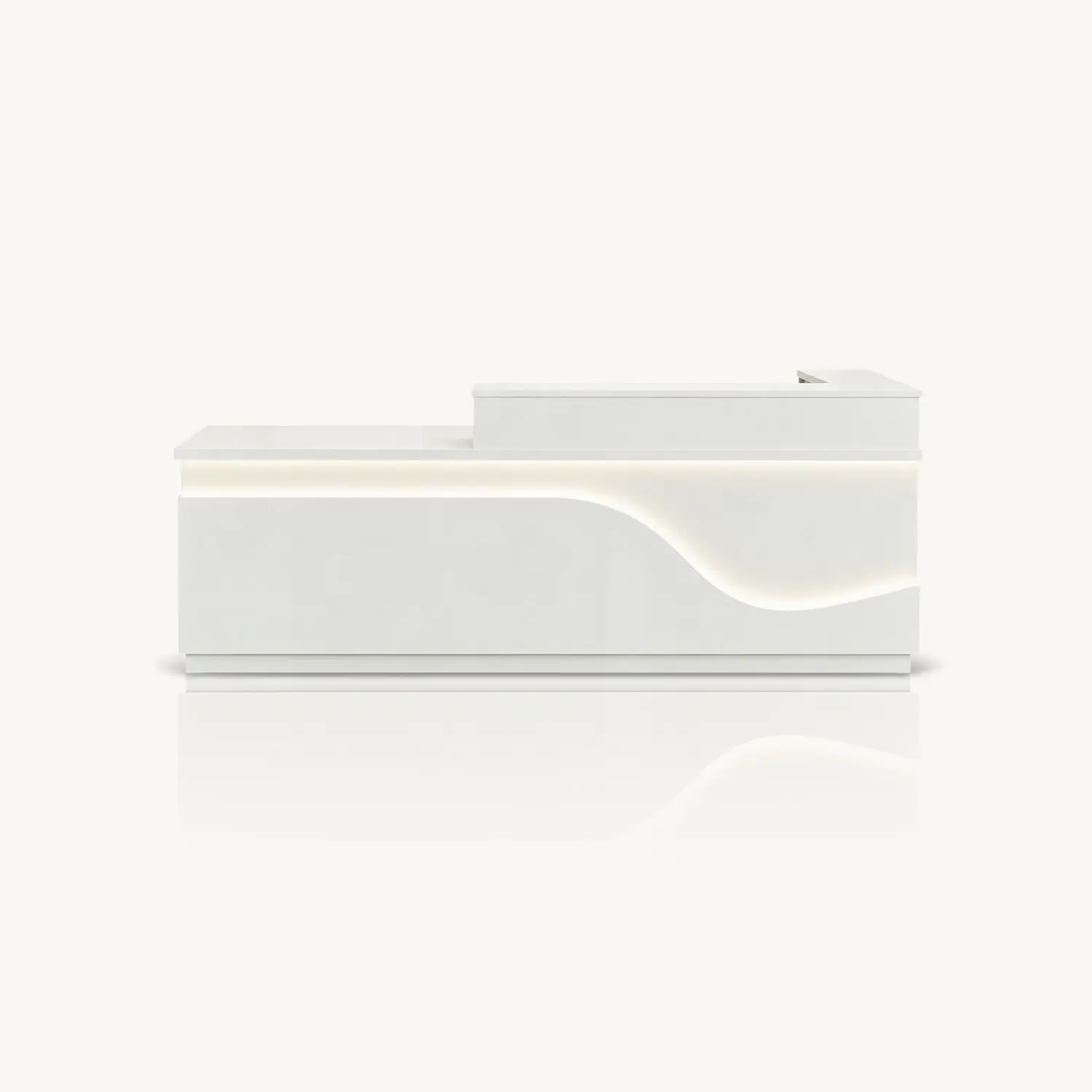
| Light or White Desk | Bright, open, minimalist | Smaller offices, creative spaces, modern interiors |
If you want a more elevated office, browse luxury executive desks. If you want a cleaner and more flexible look, start with modern executive desks.
Choose by Office Layout
The best executive desk also depends on where it will sit in the room. A desk placed against a wall has different needs than a desk placed in the center of a private office.
Common Executive Desk Mistakes to Avoid
Buying Too Large
A large desk can look impressive online but overwhelm a smaller office once the chair and storage are added.
Ignoring Cable Routing
Power cords, monitor cables, and chargers should be planned before the desk is placed in the room.
Not Enough Storage
Without drawers or cabinets, the office can quickly look cluttered and less professional.
Choosing Style Only
A beautiful desk still needs to support your daily work, equipment, comfort, and room layout.
Executive Desk Buying Checklist
Use this checklist before choosing your executive desk:
Create a More Professional Private Office
The right executive desk can make a private office feel more organized, more polished, and more comfortable for daily work. Start with the room size, then choose the layout, storage, cable management, and style that best supports your workflow.
Browse Maoters executive desks by modern style, L-shaped layouts, corner designs, storage options, and luxury office looks.
FAQ
What size executive desk do I need?
The right size depends on your room, chair space, visitor seating, storage needs, and computer setup. Measure the full office layout before choosing a desk, not just the wall where the desk will sit.
Is an L-shaped executive desk better than a straight desk?
An L-shaped executive desk is better if you need more work surface, separate task zones, or space for multiple devices and paperwork. A straight executive desk is often better for smaller offices or cleaner minimalist layouts.
Should an executive desk have storage?
Storage is highly useful for most executive offices. Drawers, cabinets, and side storage help keep documents, office supplies, chargers, and personal items off the desktop.
How do I manage cables on an executive desk?
Look for cable holes, back panels, wire channels, or hidden cable routes. If the desk will sit in the middle of the office, plan the outlet location and cable path before installation.
What is the best executive desk for a small office?
For a small office, a modern executive desk or corner executive desk is usually easier to place than a large luxury desk. Choose a design that keeps walking paths open and does not overwhelm the room.
What makes a desk look executive?
An executive desk usually has a stronger presence than a basic workstation. Larger scale, refined finishes, storage, privacy panels, and a polished visitor-facing design can all make a desk feel more executive.
Recommended for you
Was this article helpful?
Your feedback helps us improve.

About the author
MAOTERS Editorial Team
Ideas and practical guidance from the MAOTERS editorial team.
Related Articles
View all articles